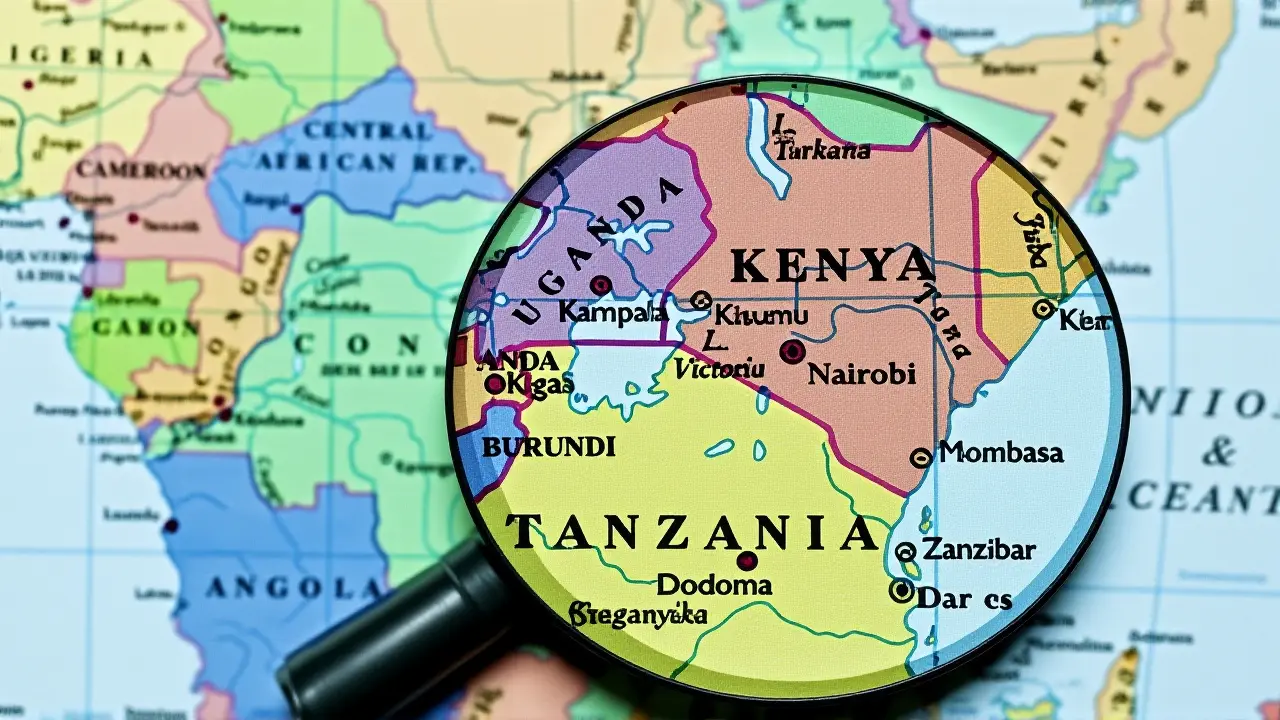
Public frustration in Kenya hit a boiling point on April 19, 2026, as William Ruto, President of Kenya, attempted to justify record-breaking fuel costs during a church gathering in Karen. The president argued that Kenya's status as a middle-income country naturally leads to steeper price adjustments than those seen in neighboring states. But for citizens watching petrol prices climb to KSh206.97 per litre, the explanation felt thin, sparking a diplomatic spat with Tanzania over who truly holds the regional crown for infrastructure.
Here's the thing: fuel prices didn't just tick up; they skyrocketed. Recent data shows petrol jumped by 16.1 percent and diesel surged by 24.2 percent to KSh206.84 per litre. To put that in perspective, Kenya has now become the most expensive place to fuel up in the region. While kerosene stayed flat at KSh152.78, the cost of moving goods and people has become a nightmare for the average Kenyan.
Infrastructure Clash: The Ruto-Ulega Debate
President Ruto's defense rested on a specific claim: that Kenya's massive investment in roads—over 20,000 kilometers of asphalt—requires heavy fuel taxes to maintain. He essentially told the public that they are paying a premium for superior roads that outperform any other East African network. It was a "pay for quality" argument, but it didn't sit well across the border.
Turns out, Abdallah Ulega, Minister for Works of Tanzania, wasn't having it. Ulega publicly fired back, disputing the notion of Kenyan superiority. He pointed out that Tanzania's road network is effectively equivalent in size and quality. More importantly, Ulega corrected the record on economic status, noting that Tanzania is also a lower-middle-income country, effectively stripping away Ruto's primary justification for the price gap.
The friction between the two leaders highlights a growing regional tension. While Ruto paints a picture of a "middle-income" burden, the hard numbers suggest a different story. In Uganda, petrol is hovering around KSh185 and diesel at KSh174. Meanwhile, Tanzania is averaging about KSh189 per litre. That's a significant difference when you're running a trucking business or commuting to work every day.
A Global Energy Storm
But wait, this isn't just an East African squabble. The crisis in Nairobi and Dar es Salaam is a ripple effect from a much larger global storm. According to the Carnegie Endowment, conflict in the Middle East is driving the global price of crude oil into the stratosphere. Specifically, the U.S.-Israeli conflict involving Iran has created a volatility that is shaking markets from Nairobi to Manila.
The impact across Asia has been nothing short of chaotic. The Baker Institute reports that the Philippines has been hit particularly hard, leading the government to declare a full-blown energy emergency. Other nations are resorting to drastic, almost unthinkable measures to keep their economies afloat:
- Vietnam: Encouraging companies to adopt permanent work-from-home models to reduce commuting and removing fuel import tariffs.
- Bangladesh: Implementing fuel rationing and taking the extreme step of closing universities.
- Pakistan: Enforcing sweeping austerity, including cutting fuel allowances for government officials and closing schools.
Even in South Africa, citizens are bracing for impact. With steep price hikes expected in the coming week, the debate there has shifted toward how to secure supply without bankrupting the consumer.
The Long Shadow of 2022
To understand why this is happening now, we have to look back at February 2022. The Stockholm Environment Institute notes that the current instability is an escalation of the energy crisis triggered by Russia's invasion of Ukraine. That event broke the old energy order, and the world has been struggling to find a new equilibrium ever since.
Interestingly, fossil fuel subsidies in East Africa have actually doubled since 2022. While these subsidies are meant to protect the poor, they've created a fiscal trap. Governments are spending more to keep prices down, but the global market is pushing them up faster than they can pay. It's a losing game of catch-up.
The real danger now, as analyzed by the Carnegie Endowment, isn't just the price at the pump. It's the "inflationary shockwave." When fuel goes up, everything—from the price of a tomato to the cost of shipping a container—goes up with it. The transport and logistics sectors are currently the canary in the coal mine; if they collapse under these costs, the entire regional supply chain could freeze.
Frequently Asked Questions
Why are fuel prices higher in Kenya than in Tanzania and Uganda?
President William Ruto claims Kenya's middle-income status and the need to maintain a vast 20,000km asphalt road network justify higher taxes. However, Tanzanian officials argue that their infrastructure is comparable and that economic statuses are similar, suggesting the price difference may stem from internal policy rather than regional necessity.
What specific price increases were recorded in Kenya?
As of April 2026, petrol prices rose by 16.1 percent to KSh206.97 per litre, while diesel saw a sharper increase of 24.2 percent, reaching KSh206.84 per litre. Kerosene remained stable at KSh152.78 per litre.
How is the global conflict in the Middle East affecting these prices?
Conflicts involving Iran and the U.S.-Israeli interests have disrupted global oil supplies and increased market volatility. This has led to a worldwide surge in crude prices, forcing countries as far away as Vietnam and the Philippines to declare energy emergencies or implement austerity measures.
What are the long-term economic risks for East Africa?
The primary risk is a massive inflationary shock. Because fuel is a primary input for transport and logistics, these costs are passed to consumers, raising the price of food and basic goods. Additionally, the doubling of fossil fuel subsidies since 2022 puts immense pressure on national budgets.
SAURABH PATHAK
April 27, 2026 AT 08:08Everyone is ignoring the obvious part here. The middle-income argument is a total joke because it doesn't account for the actual currency devaluation. If you actually look at the purchasing power parity, Kenya is just getting squeezed by its own monetary policy. It's basic economics, people. Also, blaming roads is such a lazy excuse when you could just optimize the supply chain or renegotiate trade agreements. This isn't about infrastructure, it's about a government that doesn't know how to hedge its energy imports properly. Honestly, it's embarrassing that this is even a debate in 2026.
Angie Khupe
April 28, 2026 AT 05:46It's so sad to see these countries fighting while people are just trying to survive. I hope they can find some common ground soon! 🕊️✨
Arun Prasath
April 28, 2026 AT 12:24The mention of the inflationary shockwave is an accurate assessment of the current macroeconomic climate. In several emerging markets, we have observed that fuel price volatility creates a cascading effect on food security, particularly when the transport of perishables is disrupted. It would be prudent for the East African Community to consider a regional fuel price stabilization fund to mitigate these external shocks and prevent the kind of diplomatic friction we are seeing between Kenya and Tanzania.
Sharath Narla
April 29, 2026 AT 05:51Oh sure, because nothing says "superior infrastructure" like paying double for gas just to drive on a road that's probably still under construction. Truly a masterpiece of governance. I love how they frame it as a premium service. "Pay more for the privilege of not being stuck in a ditch." Pure poetry.
Mel Alm
April 30, 2026 AT 12:36its just crazy how much prices go up overnight. feels like everythng is just geting more expensiv for no reason lol
Gary Clement
May 2, 2026 AT 05:46The Vietnam approach to work-from-home is actually a really interesting pivot for energy conservation. If you reduce the demand on the grid and the roads, you essentially lower the systemic need for fuel imports which helps the trade balance
nikolai kingsley
May 2, 2026 AT 16:46this is just plain greed. leaders think they can tax the poor into oblivion to pay for their vanity projects. tanzania is right to call it out. its absolutey disgusting to prioritize asphalt over people eating
Nikita Roy
May 3, 2026 AT 23:33we can get through this if we start looking at renewables more seriously maybe there is hope for a cheaper future
Jivika Mahal
May 4, 2026 AT 13:33I think we really need to suport local community transport an try to share rides more! it's the only way to survive when prices go crazy like this. lets help each othr out
Kartik Shetty
May 5, 2026 AT 19:34the cyclical nature of energy crises is merely a reflection of human dependency on antiquated carbon systems. it is an inevitable friction of progress that most are too intellectually limited to perceive
Anu Taneja
May 6, 2026 AT 16:09Regional cooperation is the only sustainable path forward.
vipul gangwar
May 7, 2026 AT 10:52Man, it's just a tough spot for everyone. You can see both sides-the gov wants the roads, the people want to eat. Just hope things settle down before the inflation gets even worse.
Mason Interactive
May 8, 2026 AT 20:58It's wild seeing how a conflict in the Middle East can literally close a university in Bangladesh. The world is way more connected than people realize, for better or worse.
Priya Menon
May 8, 2026 AT 22:13It is absolutely preposterous to suggest that a specific income bracket justifies a fuel price surge of this magnitude. While I appreciate the need for regional stability, the blatant disregard for the economic plight of the common citizen in Kenya is nothing short of offensive. One must wonder why the burden of "quality infrastructure" is placed solely on the shoulders of the working class while the elite continue to profit from these volatility cycles. The audacity of the administration to present this as a benefit is genuinely shocking. Infrastructure should serve the people, not be used as a justification to bankrupt them. The Tanzanian response was not only necessary but entirely justified given the factual discrepancies presented. It is high time these governments stopped playing geopolitical games with the basic needs of their population. The disparity in pricing between Uganda and Kenya is an indictment of current policy, not a result of road quality. We are seeing a systemic failure in energy management that transcends borders. This is an absolute disgrace. The global energy storm is an excuse, not a justification for internal mismanagement. The people deserve transparency, not slogans. I find the current trajectory of these East African economies deeply concerning. It is a race to the bottom where the poor always lose. This situation is utterly unacceptable and requires immediate structural reform.