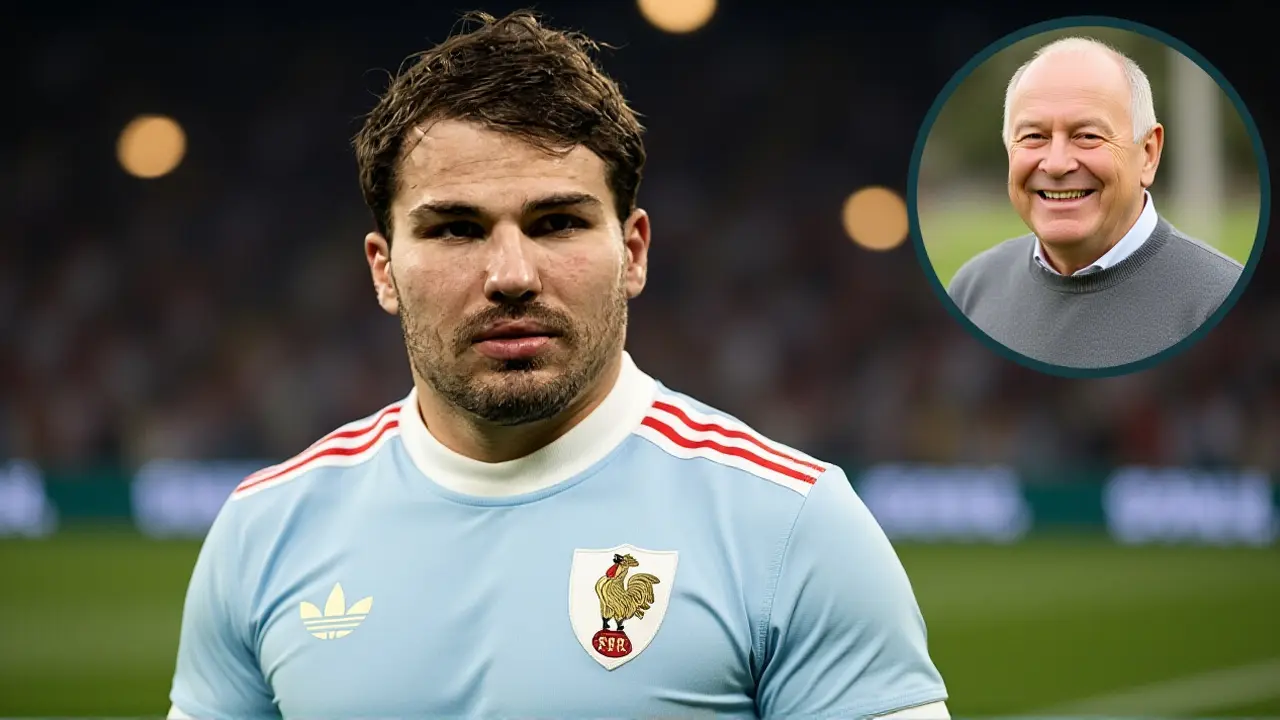
When Eddie Jones, former England and Japan head coach, declared that Antoine Dupont, France scrum-half is "not the force he was," it sent shockwaves through the rugby world. The comments, made while reflecting on the Six Nations Championship, suggest a significant shift in form for the French star following a serious knee injury. For fans who watched Dupont dominate international rugby just two years ago, the observation raises urgent questions about his future impact.
The twist is that this isn't just casual criticism. Jones has long been one of Dupont's biggest admirers, previously calling him the "single most game-changing player" in the tournament. So when someone with Jones's tactical eye says a player is "a different person," you pay attention. It signals more than a bad week; it suggests a fundamental change in how the game unfolds around him.
The Injury That Changed Everything
Here’s the thing: injuries at the elite level are brutal, but knee issues are particularly cruel for scrum-halves. They rely on explosive acceleration, sharp changes of direction, and low-center-of-gravity ball handling. Dupont suffered a significant knee rupture that kept him out of the France squad for the Autumn Internationals. While he eventually returned to play, the physical toll appears to have lingered.
RugbyMadsa and SA Rugby magazine both highlighted the severity of the damage, noting that Dupont was omitted from selection specifically because of this "significant knee injury." The timeline is clear: rupture, extended absence, return to action, and now, noticeable decline in dominance. It’s a pattern we’ve seen before with other athletes, but seeing it happen to a generational talent like Dupont feels jarring.
Turns out, the body doesn’t always bounce back exactly as it was. Even with top-tier medical care, the neuromuscular connection—the split-second instinct that makes Dupont so dangerous—can be disrupted by trauma. Jones’s assessment implies that while Dupont is still skilled, the raw power and unpredictability that defined his peak are diminished.
Jones’s Contradictory Praise
But wait. Before dismissing Dupont as past his prime, consider Jones’s broader commentary. In separate clips shared by RugbyUnity and the Rugby Unity Podcast, Jones described Dupont as "hungry" and credited him with shaping the entire narrative of the Six Nations. He called him a "game-changer" whose influence extends beyond individual stats to team dynamics.
This duality is fascinating. On one hand, Jones sees a player who no longer possesses the same overwhelming physical presence. On the other, he recognizes a mind that remains several steps ahead of opponents. Perhaps the "different player" Jones refers to is not worse, but evolved—relying more on intelligence than brute force.
It’s worth remembering that Jones himself had to adapt after major setbacks in his career. His perspective carries weight precisely because he understands the mental fortitude required to reinvent oneself. When he says Dupont is "still struggling" in some areas, it might be less a critique and more an observation of transition.
Beyond Dupont: Team Identity Crises
In the same analysis, Jones turned his attention to England, stating they are "still struggling to find their identity as a rugby team." He noted that Steve Borthwick knows how he wants the team to play, implying a disconnect between coaching vision and on-field execution. This broader context matters because Dupont’s perceived decline doesn’t exist in a vacuum—it reflects larger trends in Northern Hemisphere rugby.
Meanwhile, the South China Morning Post reported Jones paying tribute to Dupont’s hunger while discussing how Japan’s rugby plans "face reality." This links Dupont’s personal journey to national strategies across Europe and Asia. If even the best players are adapting post-injury, what does that mean for teams built around specific styles?
The ripple effects are already visible. Teams that once feared Dupont’s ability to break lines may now feel more confident pressing high. Opponents are adjusting, and the balance of power in the Six Nations could shift accordingly.
What Experts Are Saying
Coaches and analysts are divided. Some argue that Dupont’s technical skills remain elite, even if his explosiveness has waned. Others point to recent match footage showing hesitation in contact zones—a subtle but critical flaw against modern defensive structures.
One former international flanker told reporters, "You don’t lose your touch overnight. But knees? They change everything. You see it in the first step. If that’s gone, you’re playing chess instead of checkers." Whether Dupont can rediscover that first-step advantage remains the central question.
Looking Ahead
As France prepares for upcoming tournaments, the pressure mounts. Can Dupont regain his pre-injury dominance? Or will he redefine success through smarter, more controlled play? Meanwhile, England and Japan continue searching for consistency, proving that identity crises aren’t unique to any one nation.
For now, fans should watch closely. The next few months will reveal whether Jones’s warning was prophetic or premature. One thing is certain: Antoine Dupont’s story is far from over. It’s just entering a new chapter.
Frequently Asked Questions
Why did Eddie Jones say Antoine Dupont is 'not the force he was'?
Jones made this comment after observing Dupont’s performances following a serious knee injury that caused him to miss the Autumn Internationals. The injury appears to have affected Dupont’s explosive speed and physical dominance, leading Jones to conclude that while Dupont remains highly skilled, he no longer operates at the same overwhelming level as before.
How severe was Antoine Dupont’s knee injury?
Dupont suffered a significant knee rupture that required him to sit out the Autumn Internationals. Medical reports describe it as a major structural damage, which typically involves ligaments or cartilage. Such injuries often require extensive rehabilitation and can alter an athlete’s biomechanics permanently, especially in positions demanding rapid acceleration like scrum-half.
Has Eddie Jones always praised Antoine Dupont?
Yes, Jones has frequently lauded Dupont, previously calling him the "single most game-changing player" in the Six Nations and describing him as "hungry" and influential. His recent comments represent a nuanced shift rather than outright criticism, acknowledging Dupont’s enduring tactical brilliance while questioning his current physical peak.
What did Eddie Jones say about England’s rugby identity?
Jones stated that England is "still struggling to find its identity as a rugby team," suggesting a gap between head coach Steve Borthwick’s strategic vision and the team’s on-field execution. This indicates ongoing challenges in establishing a consistent playing style under the current management structure.
Will Antoine Dupont recover his previous form?
It’s uncertain. While Dupont retains exceptional technical skills and game intelligence, recovering the explosive physicality that defined his peak depends on continued rehabilitation and adaptation. Many experts believe he may evolve into a more cerebral player rather than returning to his former dominant style.