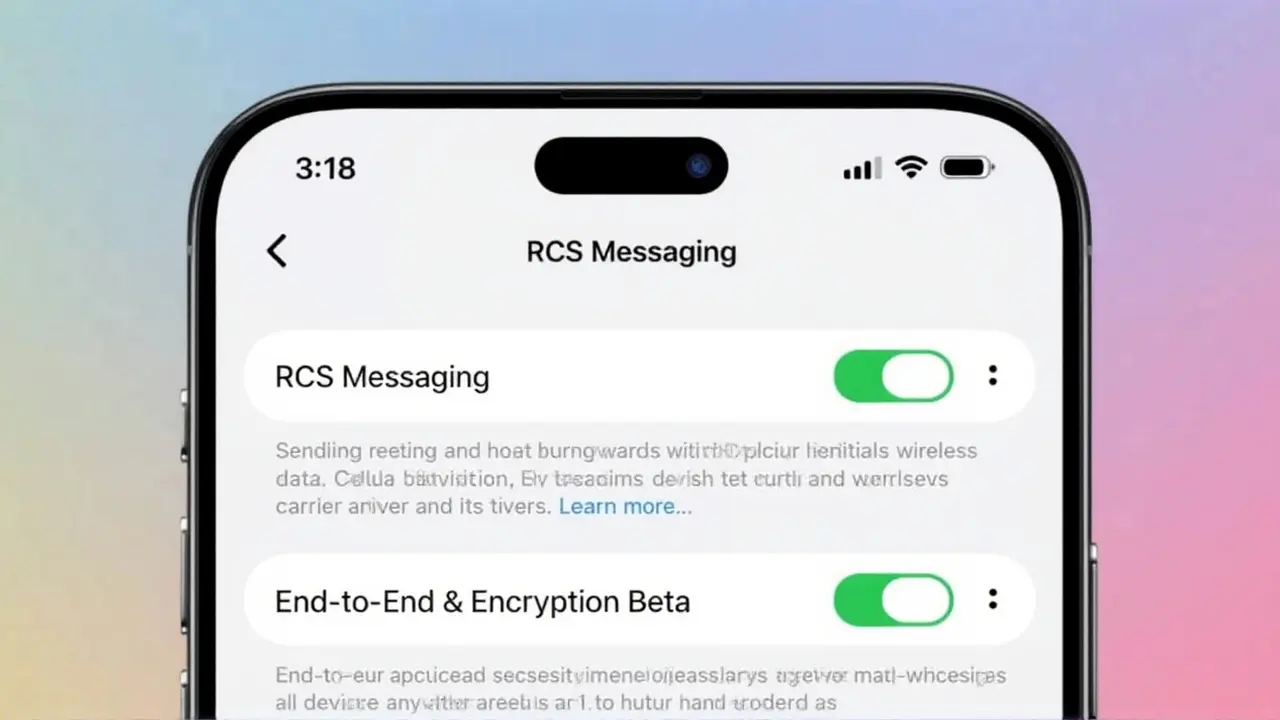
For years, texting between an iPhone and an Android phone felt like shouting across a busy street—anyone could listen in. That era officially ends today. Tim Cook, CEO of Apple Inc., announced on May 11, 2026, that end-to-end encrypted Rich Communication Services (RCS) messaging is beginning its beta rollout. This isn't just a minor update; it’s the culmination of a massive industry shift that finally bridges the privacy gap between Apple’s ecosystem and the rest of the world.
The twist? It’s happening right now, but not for everyone at once. Users running iOS 26.5 on their iPhones, paired with Android users on the latest version of Google Messages, are starting to see these secure chats appear. But here’s the catch: your carrier has to support it too. If you don’t see a little lock icon, your messages are still traveling plain text. It’s a bit like getting a new security system for your house, but only if your neighborhood has the right wiring.
A Cross-Industry Peace Treaty
Here’s the thing about tech giants: they rarely agree on anything. Yet, Apple Inc. and Google LLC have led a joint effort to bring this level of security to standard SMS-like messaging. They didn’t do it alone. The GSM Association (GSMA), the global standards body for mobile telecommunications, published the RCS Universal Profile 3.0. This specification implements the Messaging Layer Security (MLS) protocol, which handles the heavy lifting of encryption.
Why does this matter? Until now, iMessage was the gold standard for privacy between Apple devices, but it was a walled garden. Android users were locked out. RCS was introduced as the modern replacement for old-school SMS, offering better media quality and typing indicators, but it lacked true privacy. As the Electronic Frontier Foundation (EFF) noted in a recent post titled “Victory! End-to-End Encrypted RCS Comes to Apple and Android Chats,” this move means conversations between Android and iPhone will soon be encrypted by default in their native chat apps.
How to Tell If You’re Protected
You might be wondering if you’re already part of this beta. The answer depends on three things: your software, your partner’s software, and your carrier. On iOS, you need version 26.5 or later. On Android, you need the most recent update of Google Messages. Crucially, both parties’ carriers must support the latest RCS encryption standards.
When all stars align, you’ll see two clear indicators:
- A small lock icon next to your messages.
- The word “Encrypted” displayed at the top of the conversation thread.
If you don’t see those, assume your messages are not protected. Encryption is on by default in settings, but it won’t activate until every person in the chat meets the requirements. It’s an all-or-nothing scenario. If one person in a group chat is on an older device or unsupported carrier, the entire conversation falls back to unencrypted RCS or even legacy SMS.
Privacy Implications: No More Peeking
The technical details reveal a significant win for user privacy. With end-to-end encryption (E2EE) active, neither Apple, Google, nor your cellular carrier can read the contents of your messages. They act merely as pipes, transporting data they cannot decipher. This closes a long-standing loophole where cross-platform texts were vulnerable to interception or surveillance.
However, don’t get complacent yet. The EFF warns that until you see that lock icon, “conversations are not protected with end-to-end encryption.” Many users may continue texting without realizing they aren’t fully secured, especially during the staggered rollout period. It’s likely to take months for full adoption across all major carriers and device fleets.
What’s Next for Texting?
This beta marks the beginning of the end for insecure texting. While iMessage remains the preferred method for Apple-to-Apple communication due to its seamless integration and longer history of E2EE, RCS is catching up fast. For mixed-device households and professional contacts who use Android, this change brings peace of mind previously unavailable outside of third-party apps like Signal or WhatsApp.
Expect carriers to announce their support timelines over the coming weeks. In the meantime, check your settings under Messages > Send & Receive to ensure RCS is enabled. And keep an eye on that lock icon—it’s the new symbol of digital trust in our pockets.
Frequently Asked Questions
Does this mean all my texts are now encrypted?
Not automatically. Only RCS conversations between iOS 26.5+ devices and updated Android devices on supported carriers are end-to-end encrypted. Legacy SMS/MMS messages remain unencrypted. Always look for the lock icon to confirm protection.
Which carriers support encrypted RCS?
Support varies by region and provider. Major carriers in the US and Europe are rolling out support gradually. Check with your specific mobile operator or visit the GSMA website for a current list of participating networks supporting RCS Universal Profile 3.0.
Can I turn off end-to-end encryption?
Encryption is enabled by default in iOS 26.5 settings. While there is a toggle in the Messages section of Settings, disabling it may prevent you from sending RCS messages entirely if the recipient requires it. It is generally recommended to leave it on for maximum security.
Why is this called a 'beta' if it's in the final iOS update?
The feature is technically present in iOS 26.5, but labeled 'beta' because carrier support is incomplete. The rollout depends on external infrastructure updates beyond Apple's control, so functionality may vary or fail for some users initially.