
When Oldham Athletic AFC released its quirky "Boundary Bulletin" on March 24, 2026, fans got more than just women's semi-final ticket details—they stumbled upon a tale of two "boundaries" dividing football history and local politics alike. The bulletin highlighted the Academy's nail-biting 4-3 win over Walsall while spotlighting a 1978 showdown at Boundary Park between Oldham and Notts County, where six goals sparked decades of debate. Turns out, boundaries aren't just kicking fields—they're reshaping Nottinghamshire's governance too.
The twist is this: the same week fans gear up for cup drama, Nottinghamshire's councils are battling over redrawing their own map-like lines. Here's how two seemingly unrelated worlds collided in headlines.
Footy History Meets Modern Playbook
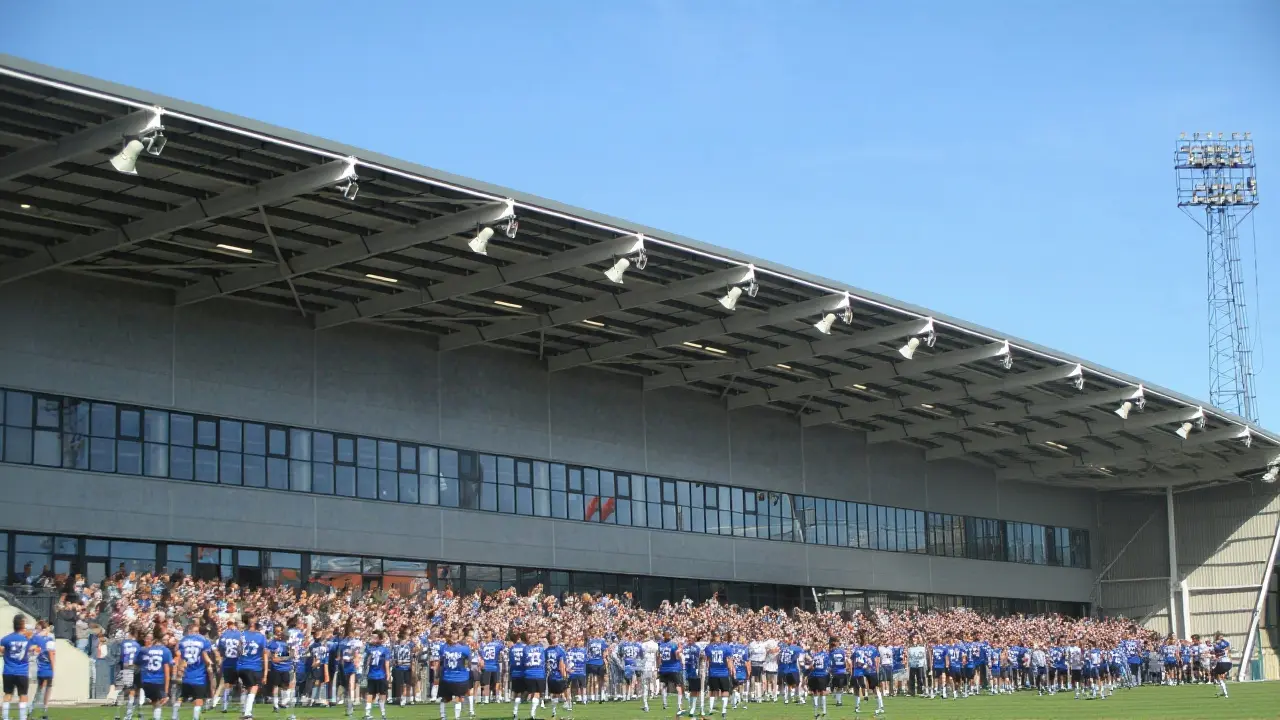
Peter Berry's "We've Met Before" chronicle dug up grit from that frostbitten 1978 clash. Back when coal-fired factories still hummed nearby, Oldham and Notts County traded headers and hooliganism in front of 12,000 spectators. The final score? A chaotic 6-6 draw that left journalists scribbling headlines until dawn. Fast forward nearly 50 years, and Boundary Park's modern pitch is hosting women's cup action after the academy team demolished Walsall with tactical precision. Jake Leake, whose goal against Walsall drew raves, told us recovery from his ankle injury took "grinding physio sessions" and "two ice baths daily." "The game's evolved," he shrugged during our chat. "But passion? Never changes."
Fans eager to grab tickets for the upcoming semi-final can email [email protected]. Oddly enough, the bulletin's PDF format echoes old-school newspaper inserts—nostalgia packaged as digital download.
Nottinghamshire's Power Redraw
While fans debated vintage matches, Council Leader Neil Clarke called a different type of boundary change "a land grab." That explosive quote landed during BBC interviews about the Local Government Boundary Commission for England's plan to merge Broxtowe, Gedling, and Rushcliffe boroughs into a unitary council. Nottingham City Council stands alone backing the move, despite skepticism from smaller authorities. Why? The council hired PricewaterhouseCoopers (PwC) to crunch numbers—and their October 15 report found service savings outweighed transition costs. Children's Social Care teams could finally drop district-level silos, the consultants concluded. "One stop shop" delivery sounds great, critics argued, but what about losing local representation?
Stakeholders Square Off
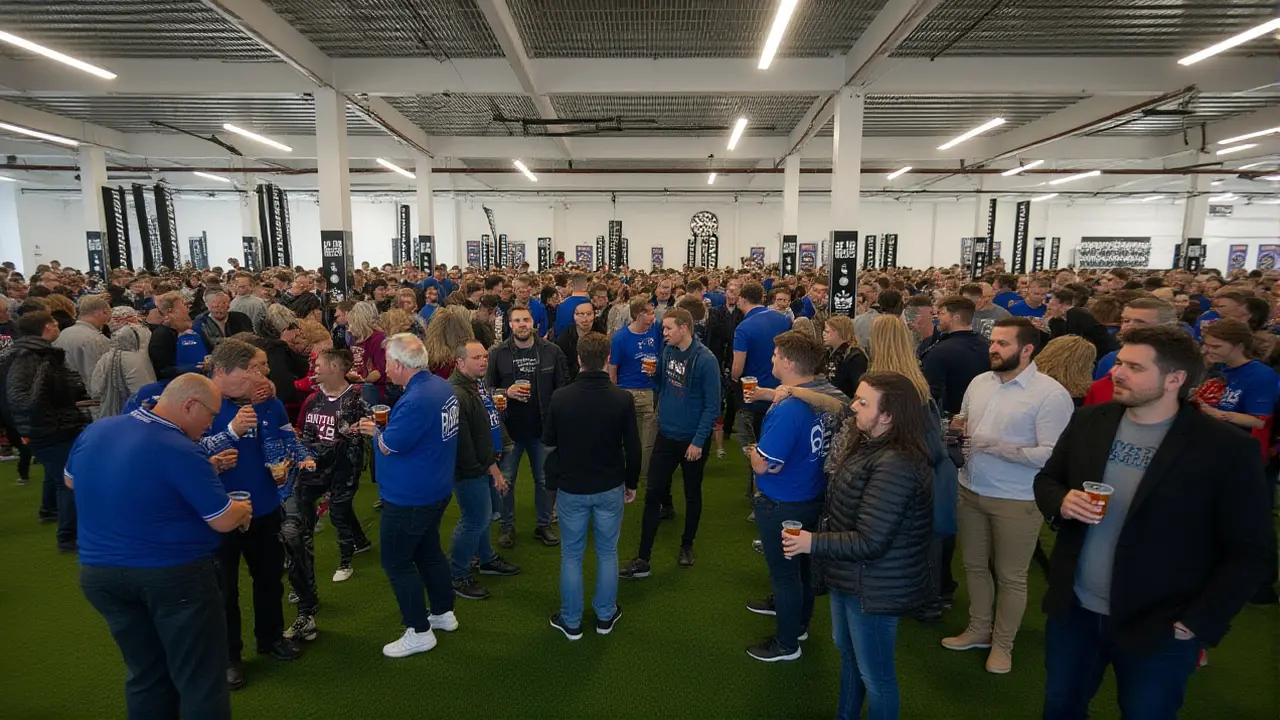
Rushcliffe residents protested last Tuesday waving "No Land Grab" banners outside the council chambers. Meanwhile, Nottingham officials stress long-term gains. "Children won't lose support," a spokesperson noted. "Better integration means faster responses." The tension mirrors historic turf wars—remember when Greater Manchester swallowed neighboring towns in the 1970s? This time, deadlines loom: proposals hit Whitehall by November 28, 2025, with summer 2026 verdicts expected.
Some experts warn complexity isn't free. One-off IT migrations and staff rehiring could cost £3.2 million upfront. Yet the payback period clocks under three years, per internal projections. "It's like replacing your entire car engine mid-drive," Clarke joked dryly. "You do it only if the alternative's worse."
What Comes Next
Two paths diverge here. On the pitch, Oldham's women fight for trophies; in city halls, bureaucrats redraw power maps. Both hinge on whether "boundary" means victory line or voting district. Watch for May 2026 parliamentary scrutiny sessions—and yes, someone's already designing T-shirts merging football kits with constituency maps.
Frequently Asked Questions
How does this affect sports clubs?
Boundary changes won't directly impact football operations, but merged councils may centralize venue funding decisions. Clubs like Oldham Athletic often navigate multiple authorities for permits, grants, and infrastructure support—a single unitary body could streamline or complicate processes depending on policy shifts.
Why call it a 'land grab'?
Critics argue expanding Nottingham City's influence encroaches on established borough jurisdictions. Similar controversies erupted during London's M25 expansion debates, where urban growth sparked accusations of absorbing suburban resources without proportional community input.
When will decisions take effect?
If approved by Summer 2026, operational restructuring likely begins late 2026. Transition timelines reference the 2014-15 LGBCE review model, which saw full implementation within 18 months post-ratification.
Are fan events impacted by political changes?
Match scheduling remains unaffected, but future stadium upgrades could require approvals from new council structures. Historical precedents show such transitions rarely disrupt league calendars—though fan engagement campaigns might gain extra attention during political transitions.
Who benefits most from unitary councils?
PwC analysis suggests child protection services see largest gains through unified databases and coordinated case management. Smaller districts currently struggle sharing SEND caseloads, creating gaps exploited by bureaucratic fragmentation.
Jane Roams Free
March 26, 2026 AT 10:05The women's team performance really highlights how much effort goes into recovery programs these days. Fans often overlook the physical grind required to get back on the pitch after injuries like ankle sprains. It takes genuine dedication to complete those ice baths daily while maintaining high fitness levels. The semi-final tickets are going to be worth seeing live given that tactical precision displayed recently. Supporting the academy helps sustain the club beyond just men's league results. Everyone deserves a shot at winning trophies regardless of age or gender categories. I hope the new season brings even more visibility for female athletes in the region.
Anthony Watkins
March 26, 2026 AT 18:57This whole thing is fake news and you know it 😡 Why waste time on British council boundaries? Focus on your own mess instead! They are trying to control every little line on the map for power grabs 🙄 Typical corrupt politicians doing whatever they want without asking anyone. Just another way to take money from the regular people. Stop trusting these reports blindly friends! 💀
Bryan Kam
March 27, 2026 AT 21:13That makes absolutely zero sense.
Cheri Gray
March 29, 2026 AT 00:30I think the bounary changes could help save momey in the long run even if it feels scaring now. Local reps might disappear but maybe the kids get better social care services overall. It reminds me of old neighborhood mergers back when i was younger growing up. We need to stay positive abt the future possiblities for everyone involved. Just hope they dont rush the IT migration part too much.
Vikram S
March 29, 2026 AT 11:36The analysis presented lacks rigorous academic scrutiny!! The notion of merging boroughs ignores historical precedents entirely;;; furthermore the financial projections are wildly optimistic!!! One must consider the deeper sociopolitical ramifications before accepting such superficial summaries!!! The data is insufficient!!!
nithin shetty
March 29, 2026 AT 16:28True dat man the numbers dont add up right sometimes. PwC reports rly vary depnding on who u hire imho. Still interesting to see wats happening with the stadium funding tho.
Aman kumar singh
March 30, 2026 AT 17:40It is awesome how the teams push through obstacles like injuries to succeed on the field! Seeing Jake Leake recover so quickly shows what strong support systems look like. I truly believe unity will help both the council and clubs overcome current hurdles ahead. The community spirit seems stronger than ever during this transition period. We should focus on the positive outcomes rather than fearing the unknown changes coming up. Keep believing in progress for everyone.
UMESH joshi
April 1, 2026 AT 01:48Change is inevitable and resistance only causes unnecessary suffering in the process. One must view these structural shifts as opportunities for collective growth instead. Patience allows the system to settle before judging true impact. Philosophy suggests balance lies in acceptance of necessary evolution. We should remain calm amidst the political noise currently surrounding us.
pradeep raj
April 2, 2026 AT 20:10Organizational structures are complex within local governance frameworks today. Integration requires detailed planning to avoid service disruption across regions. Funding allocation shifts occur simultaneously with administrative restructuring efforts. Local authority roles change significantly under unitary council proposals now. Service continuity matters most for vulnerable populations relying on state aid. Staff retention faces challenges during major operational transitions like this. Community representation declines when geographic zones merge without proper consultation. Strategic oversight improves through centralized command structures effectively. Operational efficiencies increase once redundant departments are consolidated fully. Technology infrastructure updates demand significant capital investment upfront. Data management protocols align better under single administration leadership. Regulatory compliance is essential for meeting national standards consistently. Public perception needs managing through transparent communication strategies regularly. Political stability supports reform efforts in volatile economic climates. Sustainable growth depends on unity among all stakeholders involved eventually.
Vishala Vemulapadu
April 3, 2026 AT 02:11You clearly misunderstand the technical nuances of PwC methodology used here. Social care databases require standardized inputs to function efficiently across districts. Fragmentation causes gaps in SEND caseload tracking which hurts children. A unified approach resolves systemic inefficiencies inherent in the current model. Critics fail to see the broader operational benefits outlined in the report.
M Ganesan
April 4, 2026 AT 06:14They are hiding something bigger behind this land grab scheme for sure. Big government wants to absorb small towns without telling the truth. Always a conspiracy when councils start talking about saving millions suddenly. People won't realize until votes are gone forever! The agenda is already written by corporate interests like PwC.
ankur Rawat
April 6, 2026 AT 04:45It is kind of funny how they design shirts with kits and constituency maps mixed together. Art reflects culture and politics always find ways to blend in everyday life. Imagination helps us see connections between sports fields and city hall meetings. Creative thinking solves problems better than anger alone ever does. Maybe the T-shirts will become a symbol of resilience soon. Let's embrace the color in our world despite gray paperwork issues.
Vraj Shah
April 7, 2026 AT 06:42Gud idea about the t shirts lol. Hopefully the kids feel safe with better care after merger happens. Keep fightin hard for whats right. Theres still hope left in the situation if we work together.
Kumar Deepak
April 8, 2026 AT 01:44Fancy calling a border redraw a land grab isn't it? Politics loves dramatic labels to scare voters unnecessarily. Meanwhile fans just want to watch the cup final without headaches. We should laugh at the panic instead of buying into fear tactics. Real passion never dies whether on pitch or ballot boxes.
Ganesh Dhenu
April 9, 2026 AT 06:46Interesting perspective on the label usage regarding political terminology. Boundaries define jurisdiction but also identity for residents living there. Silence allows leaders to push changes with minimal public friction. Observation remains the best tool for understanding ongoing developments here.
Yogananda C G
April 10, 2026 AT 17:09Hope springs eternal indeed for the future of our communities. Progress comes slowly sometimes but momentum is building steadily. People need patience daily to endure uncertainty during transitions. Change is the only constant we must accept gracefully. Unity brings strength always when facing external pressures. Division causes unnecessary stress for everyone involved in the system. Leadership must guide us well through these turbulent times ahead. Visionaries lead the way forward with clear purpose and intent. Small steps build big things over many years of effort. Together we can achieve more than individual factions allow. Fear should not rule decisions made in public forums anymore. Trust builds stronger communities than suspicion ever could have. Future generations watch closely how we handle these responsibilities. History teaches us lessons if we bother listening carefully. We move ahead with purpose despite obstacles in the path.